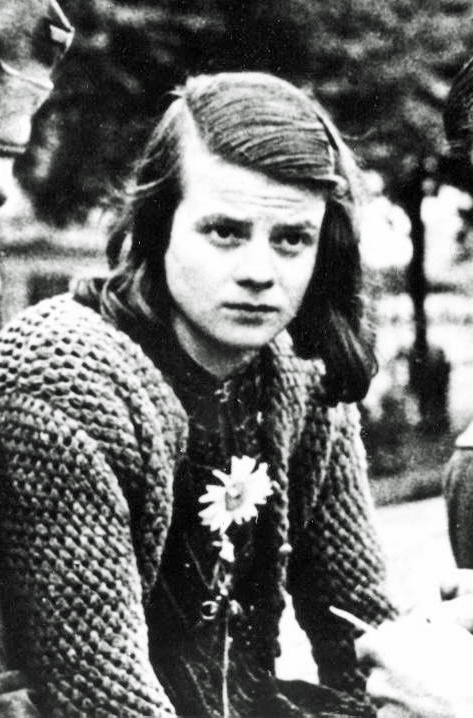
Biography
Sophia Magdalena Scholl was a German anti-Nazi political activist and a key member in the White Rose non-violent resistance group in Nazi Germany. Scholl was only 21 when she gave her life for her anti-Nazi resistance work.
Archive beta: biographies are source-linked; map, timeline, context, date, and coordinate metadata may be approximate or under review.
What this means
Reviewed items have a source behind them. Approximate items are useful context, not final proof. Needs source and beta review labels mark places where the archive is still checking the trail.
Sophia Magdalena Scholl was a German anti-Nazi political activist and a key member in the White Rose non-violent resistance group in Nazi Germany. Scholl was only 21 when she gave her life for her anti-Nazi resistance work. Scholl remains one of Germany’s great dissenting heroes of the World War II. Despite that fact, few people outside of Germany know of her name or of the courage that allowed her to face death rather than give up her belief in what was right.
In 1942, her father was sent to prison after he was overheard calling Hitler “the scourge of humanity,” and Sophie herself was forced to work in a metallurgical plant in Ulm over the summer break. Moved to action, the White Rose, comprised of just six members, soon began distributing pamphlets denouncing the Nazis and calling on their fellow Germans to resist Hitler’s regime. “We will not be silent,” they wrote. “We are your bad conscience. The White Rose will not leave you in peace!” They called themselves the White Rose to conjure up an image of purity and innocence in the face of evil. Sophie was an invaluable member of the group: she wrote the intellectual and philosophical arguments in the pamphlets, urging others to find ways to resist the Nazi regime. As a woman, she also played an important role in the distribution of the pamphlets as she was less likely to be randomly stopped and searched by the SS than her male counterparts.
In 1943, she was eventually arrested for this, and she full responsibility to protect other members of the group. Despite this, Sophie, her brother Hans, and another friend were all found guilty of treason and sentenced to be executed by guillotine. The execution was carried out only a few hours after sentencing. Prison officials later remarked on Sophie’s courage as she walked to her execution; her last words were, “How can we expect righteousness to prevail when there is hardly anyone willing to give himself up individually to a righteous cause? Such a fine, sunny day, and I have to go, but what does my death matter, if through us, thousands of people are awakened and stirred to action?”
After Sophie’s and her heroic group members’ deaths, a copy of the pamphlet over which they were arrest was smuggled out of Germany and delivered to the Allies. It was retitled The Manifesto of the Students of Munich and Allied Forces dropped millions of copies, spreading their words of conscience and calls for resistance across Germany. After the war, verdicts like those against the Scholls were overturned; Germany now considers the White Rose members to be heroes. Sophie Scholl is an inspiration to all women. Her bravery and sacrifice is a powerful reminder of the importance of standing up against injustice, hatred, and tyranny.
- Lifespan
- 1921-1943
- Nationality
- German
- Occupations
- Student, Anti-Nazi activist
- Era
- World War II
- Born
- 1921 Reviewed
- Died
- 1943 Reviewed
- Tags
- German, World War II, Student, Anti-Nazi activist
- Themes
- Activism, Power and Resistance, Global History