Biography
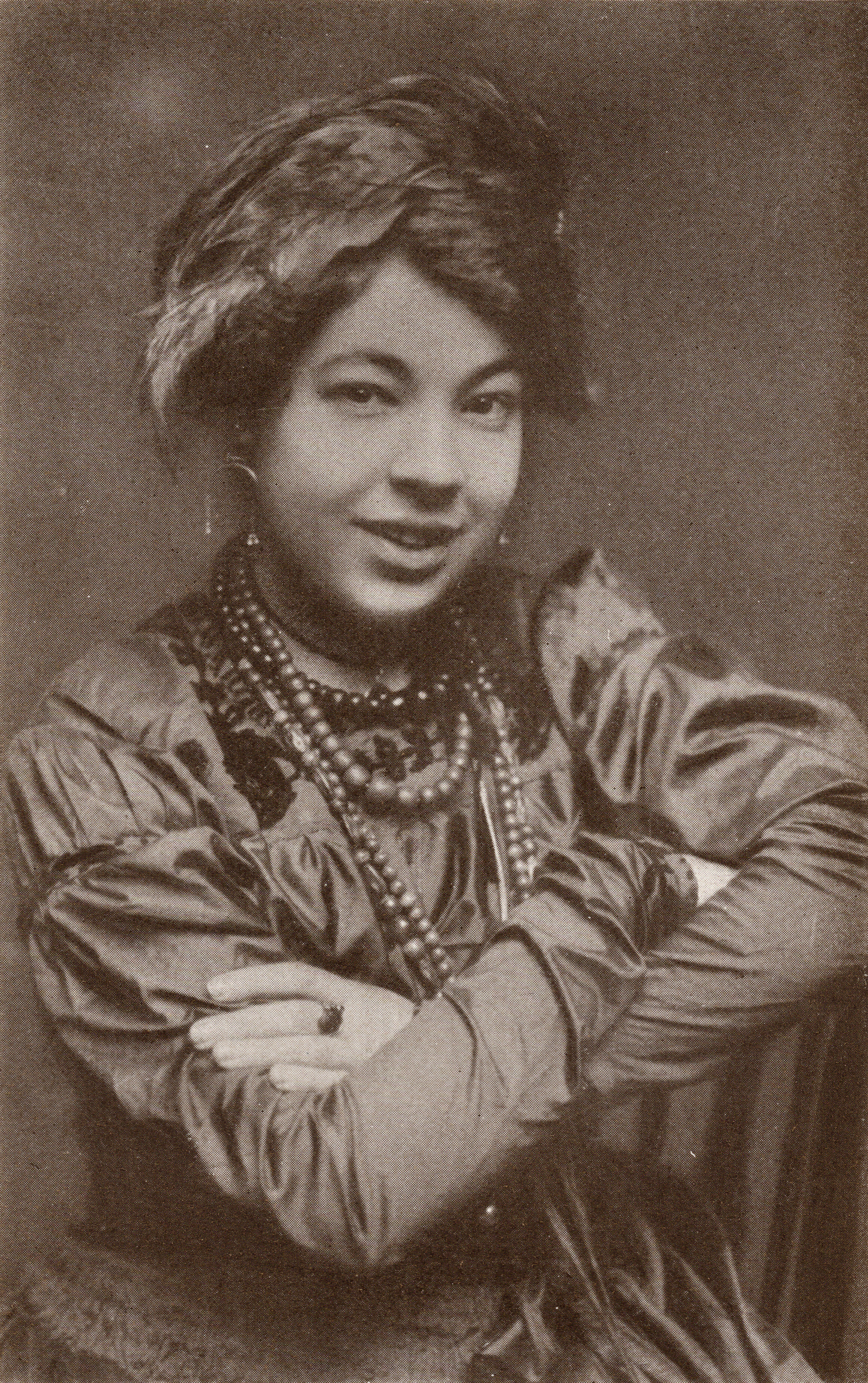
Pamela Colman Smith, nicknamed "Pixie", was a British artist, illustrator, writer, publisher, and occultist. She is best-known for illustrating the iconic and original Rider–Waite Tarot for Arthur Edward Waite.
Archive beta: biographies are source-linked; map, timeline, context, date, and coordinate metadata may be approximate or under review.
What this means
Reviewed items have a source behind them. Approximate items are useful context, not final proof. Needs source and beta review labels mark places where the archive is still checking the trail.
Pamela Colman Smith, nicknamed “Pixie”, was a British artist, illustrator, writer, publisher, and occultist. She is best-known for illustrating the iconic and original Rider–Waite Tarot for Arthur Edward Waite. This tarot deck became the standard among tarot card readers, and remains the most widely used today. She was also a once-incarcerated women’s suffragist, world traveler, prolific letter writer, party hostess, public entertainer, storyteller and mystic, who at age 73 converted to Catholicism and revived a withering chapel in the English countryside. Pixie’s life was filled with excitement, mystique and magic; and that sensibility came through in her work.
Having flirted with magic sporadically, she joined the Hermetic Order of the Golden Dawn, a secret 19th-century occultist group influenced by Freemasonry lol. Through the occult she met Arthur Edward Waite, an occult scholar who commissioned her to illustrate the tarot deck he was creating in 1909; she was only paid a small one-time fee for many months of work and research. Pixie created 80 drawings for Waite’s tarot deck, one of the first to be fully illustrated. When the deck was mass-marketed in England, her name was left off the packaging, but she ensured her legacy in the coiling initials she inked in the corner of each card. She used the same serpentine sigil on most of the art works she created over her lifetime.
After her parents died, Pixie drew “The Wave” (1903); it depicts seven mourning creatures emerging from the ocean, their grief-sloped blue bodies turned in angles of agony and reflection. “The Wave” is in the collection of the Whitney Museum of American Art. “It’s a magical, beautiful, very intuitive work — a lyrical presentation anthropomorphizing nature as women in states of mourning, and that’s immediately engaging,” the Whitney curator Barbara Haskell said in an interview. “Her work hits a nerve in today’s world: In the face of crisis, people really do yearn for an authentic connection to the soul.” Women imagined as trees and waves are recurring themes in Pixie’s art.
In the early 1900’s, Pixie published poems and drawings with Jack B. Yeats (brother to poet W.B. Yeats) in the periodical A Broad Sheet, she created a literary magazine called The Green Sheaf, for which she hand-painted the art for each copy. In 1907, she became the first artist who was not a photographer to have her work displayed by Alfred Stieglitz in his experimental gallery 291 in Manhattan. She had two more solo shows at the gallery over the next four years. That same year she wrote a manifesto, “A Protest Against Fear,” in which she argued that “fear has got a hold of all this land. Each one has a great fear of himself, a fear to believe, to think, to do, to be, to act.” She urged younger artists, “Try to feel truly one thought, one scene, and make others feel it as keenly as you do — thus is art born.”
After her tarot illustrations, Pixie turned her attention to the suffragist movement, designing posters and cartoons for London’s militant artist collective known as the Suffrage Atelier. She later joined the executive council of the Pioneer Players, a theater society that produced plays written by women, where she illustrated playbills and designed costumes. She also joined suffrage protests and was jailed at least once. She died of a heart ailment on Sept. 18, 1951 and was buried in an unmarked grave. But her legacy lingers beyond the confines of an English countryside cemetery. A distant relative of hers described her as “this radical feminist — an iconoclast — who was so ahead of her time.”
- Lifespan
- 1878-1951
- Nationality
- British-American
- Occupations
- Artist, Illustrator, Writer
- Era
- Suffrage Movement
- Born
- 1878 Needs source
- Died
- 1951 Needs source
- Tags
- British-American, Suffrage Movement, Artist, Illustrator, Writer
- Themes
- Activism, Writing, Arts and Culture, Global History