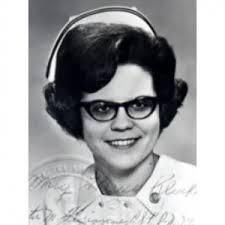
Biography
Captain Mary Therese Klinker was a U. S.
Archive beta: biographies are source-linked; map, timeline, context, date, and coordinate metadata may be approximate or under review.
What this means
Reviewed items have a source behind them. Approximate items are useful context, not final proof. Needs source and beta review labels mark places where the archive is still checking the trail.
Captain Mary Therese Klinker was a U.S. Air Force flight nurse who died during Operation Babylift, a humanitarian mission to evacuate orphans from Vietnam. She was the last nurse and the only member of the Air Force Nurse Corps to be killed in the Vietnam War.
In January 1970, near the end of the Vietnam War, Mary joined the US Air Force. She quickly advanced and became a flight nurse assigned to the 10th Aeromedical Evacuation Squadron. Her responsibilities extended beyond patient care to include instruction and flight examinations, highlighting her leadership and technical expertise! Flight nurses in the Vietnam War era faced constant danger, and they were the lifeline of aeromedical evacuation. They worked under fire, stabilized patients midair, and served as the highest-ranking medical personnel aboard transport aircraft, overseeing the care and safe evacuation of wounded soldiers from combat zones to hospitals across Asia and the U.S. Despite being officially classified as noncombatants, they trained with weapons and faced real risks on missions that exposed them to hostile fire and hazardous conditions. Their presence also offered a psychological boost for patients, who often found comfort in the nurses’ care during chaotic and painful journeys. Mary operated at the intersection of military duty and humanitarian aid, where her skills and compassion were invaluable.
In 1975, Mary volunteered for Operation Babylift and joined a crew charged with escorting over 2,000 children to safety. One nurse described the scene as a “sea of babies” lying on mats—crying, cooing, and playing—dressed in lace and patent leather shoes by their Vietnamese caregivers. The crew then transported the children aboard a massive C-5A Galaxy aircraft, which carried “about 25 cardboard boxes holding two or three babies apiece”. Just minutes after takeoff, the rear cargo door of the C-5A Galaxy failed, causing rapid decompression and forcing the pilots into an emergency descent. In the chaos, Mary remained in the cargo hold, caring for an unconscious medic. When the aircraft broke apart during its crash landing, she and all those in the lower deck were killed.
Remembered for her courage and compassion in her final moments, Mary was the last nurse to die in the Vietnam conflict. Her name appears on Panel O1W, Row 122 of the Vietnam Veterans Memorial in Washington, D.C. She was one of only eight women among more than 58,000 commemorated there. Mary’s legacy continues through memorials and service organizations; she was posthumously awarded the Airman’s Medal for Heroism and the Meritorious Service Medal, the Mary T. Klinker Veterans Resource Center in Lafayette, Indiana, provides support for unhoused and at-risk veterans, including counseling, financial aid, and housing assistance. As a chapter of the Disabled American Veterans, the center reflects Mary’s enduring mission of compassion and service. She is remembered as a war hero who gave her life to save children from danger, her strength and bravery embroidering the lives of those she saved. We remember her on National Vietnam War Veterans Day.
National Vietnam War Veterans Day
- Lifespan
- 1945-1975
- Nationality
- American
- Occupations
- Educator
- Era
- 20th Century
- Born
- 1945 Needs source
- Died
- 1975 Needs source
- Tags
- American, 20th Century, Educator
- Themes
- Education, Global History