Biography
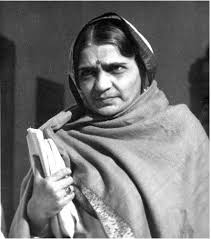
Hansa Mehta was a Gujarati woman who fought for women's equality in India and beyond. She became a famous nationalist leader, an early feminist, and the first woman Vice Chancellor of two different Indian universities.
Archive beta: biographies are source-linked; map, timeline, context, date, and coordinate metadata may be approximate or under review.
What this means
Reviewed items have a source behind them. Approximate items are useful context, not final proof. Needs source and beta review labels mark places where the archive is still checking the trail.
Hansa Mehta was a Gujarati woman who fought for women’s equality in India and beyond. She became a famous nationalist leader, an early feminist, and the first woman Vice Chancellor of two different Indian universities. Hansa stood up against the British government during India’s struggle for independence. She campaigned for women’s social and political equality and their right to an education. And she fought for her ideals during the framing of the constitution for a newly independent India. Hansa was one of three women who drafted the Indian Women’s Charter of Rights and Duties, which affirmed that women have equal rights to education, suffrage, pay and distribution of property, as well as the same rights as men in marriage and divorce.
In 1947, at a meeting of the UN Commission on Human Rights, Hansa had been appointed as one of just two women delegates, alongside Eleanor Roosevelt. Hansa objected to the wording of Article 1 of the Universal Declaration of Human Rights, which the commission was tasked with framing. In the phrase “All men are born free and equal in dignity and rights,” Hansa pointed out that the phrase “all men” was out of date and could be interpreted to exclude women. Roosevelt countered that the use of the word “men” was “generally accepted to include all human beings,” according to minutes of the meeting, but Hansa held her ground, insisting that the language be changed to “human beings.” The declaration was adopted with her suggestion the next year, and it has been used as the foundation for treaties around the world.
As a founder of the All India Women’s Conference, and later its president, Hansa tied the political struggle for India’s independence with the fight to improve the condition of her countrywomen. She was appointed to the Commission on the Status of Women in 1946 and to the Commission on Human Rights in 1947 — the same year that India gained its independence — and served until 1952. As an assembly member, she lobbied for a civil code that would eventually supersede religious laws and ensure gender equality, and she strengthened the language on what are known as “directive principles” — guidelines that are unenforceable by the courts but nonetheless crucial in governing a multiethnic and multireligious secular democracy.
The library at the University of Baroda, where she held the title as the first woman Vice Chancellor, is named after her. In 2021, the U.N. held the inaugural Dr. Hansa Mehta Dialogue, a discussion on the fundamental importance of women’s empowerment. Hansa is remembered as a fierce and dedicated advocate of women’s rights.
- Lifespan
- 1897-1995
- Nationality
- Indian
- Occupations
- Reformer, Educator, Diplomat
- Era
- 20th Century
- Born
- 1897 Needs source
- Died
- 1995 Needs source
- Tags
- Indian, 20th Century, Reformer, Educator, Diplomat
- Themes
- Activism, Power and Resistance, Education, Global History