Biography
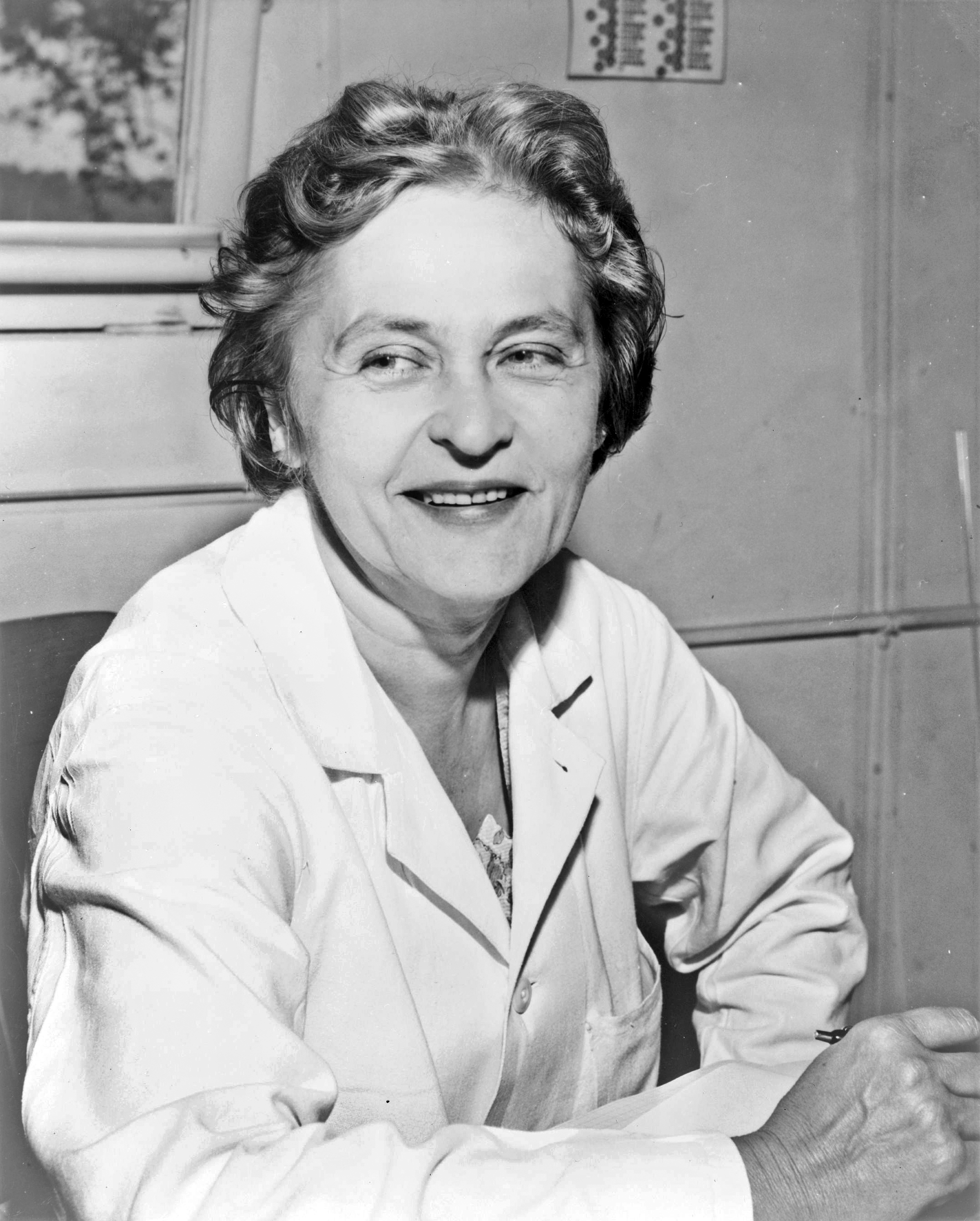
Mária Telkes was a Hungarian-American biophysicist, engineer, and inventor who worked on solar energy technologies. Mária is often referred to as the “Sun Queen”, as she is best known for her invention of the solar distiller and the first solar-powered heating system designed for residences.
Archive beta: biographies are source-linked; map, timeline, context, date, and coordinate metadata may be approximate or under review.
What this means
Reviewed items have a source behind them. Approximate items are useful context, not final proof. Needs source and beta review labels mark places where the archive is still checking the trail.
Mária Telkes was a Hungarian-American biophysicist, engineer, and inventor who worked on solar energy technologies. Mária is often referred to as the “Sun Queen”, as she is best known for her invention of the solar distiller and the first solar-powered heating system designed for residences. She also invented other devices capable of storing energy captured from sunlight.
In 1939, as part of the Solar Energy Conversion Project at MIT, she worked on thermoelectric devices powered by sunlight. Mária was assigned to the U.S. Office of Scientific Research and Development during WWII, and it was there that she created a solar distiller capable of vaporizing seawater and recondensing it into drinkable water. The system was carried aboard life rafts during the war and was also scaled up to supplement the water demands of the Virgin Islands. She remained at MIT after the war, becoming an associate research professor in metallurgy in 1945. Until the end of her career, Mária continued to develop solar-energy applications and received several patents for her work.
Although she was such a prolific inventor, she struggled to be taken seriously by her colleagues and collaborators throughout her career. She encountered many a double standard when dealing with male journalists, who focused mainly on her physical attributes while ignoring her scientific contributions. They would describe her as an “attractive Hungarian blonde scientist,” “a burn-haired scientist,” and “charming but completely inaccessible.” Being the smarticle that she was, Mária learned to leverage these, at best, superficial, interactions into vital experiences and insights more generally about the press and media, that would help her promote her work and vision later in her career.
In 1948, Mária designed and constructed the world’s first modern residence heated with solar energy. She improved upon existing heat-exchanger technology to create solar stoves and solar heaters, receiving a $45,000 grant from the Ford Foundation in 1953 to create a universal solar oven that could be adapted for use by people living at all latitudes. She also worked to develop materials capable of enduring the temperature extremes of space. In 1980, she assisted the U.S. Department of Energy in the development of the world’s first solar-electric residence.
In 1952, Mária became the first recipient of the Society of Women Engineers Achievement Award. In 1977, she received lifetime achievement awards from the National Academy of Science and the International Solar Energy Society for her contributions to solar-heated building technology. After a half-century as a scientist, Mária had firmly established herself as an innovator with more than 20 patents to her name in the U.S. alone. She is recognized as one of the foremost pioneers in the field of solar energy. Speaking at a conference of women scientists in 1964, called Focus on the Future, Mária described how, after decades as a pioneering woman scientist, the only woman among men in many laboratories and teams, she saw a parallel between the “untapped potential” of the sun and the “untapped potential” of women scientists, and encouraged her audience to harness both for the betterment of all.
- Lifespan
- 1900-1995
- Nationality
- Hungarian-American
- Occupations
- Scientist, Inventor
- Era
- Modern Science
- Born
- 1900 Reviewed
- Died
- 1995 Reviewed
- Tags
- Hungarian-American, Modern Science, Scientist, Inventor
- Themes
- Science and Innovation, Global History