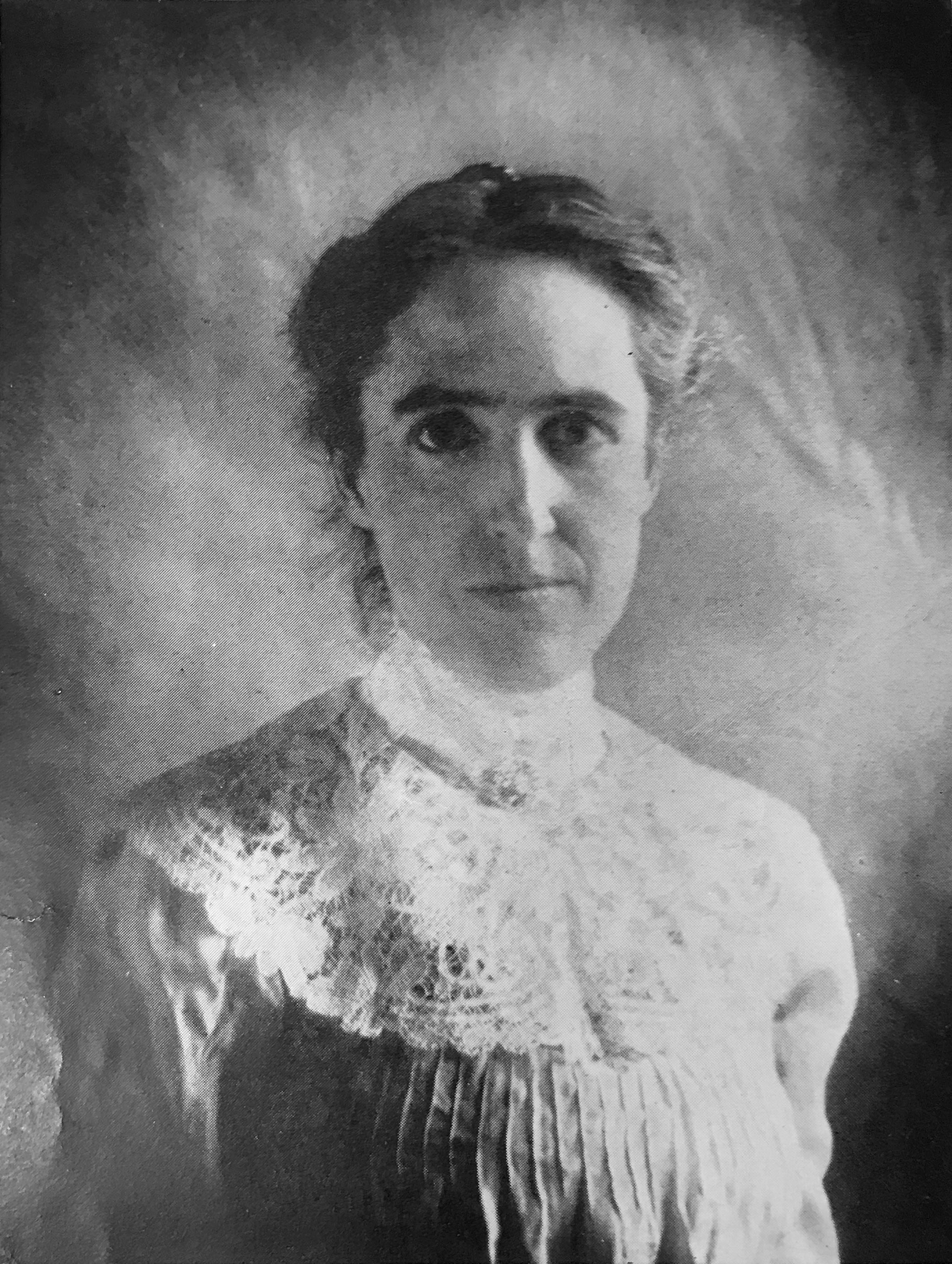
Biography
Henrietta Swan Leavitt was an American astronomer who discovered the relationship between the luminosity (brightness) and period (length of pulsation) of Cepheid variable stars. This astronomical discovery would be the foundation on which others would build their methods of measuring distance in space, even between galaxies, as well as studying the expansion of the universe.
Archive beta: biographies are source-linked; map, timeline, context, date, and coordinate metadata may be approximate or under review.
What this means
Reviewed items have a source behind them. Approximate items are useful context, not final proof. Needs source and beta review labels mark places where the archive is still checking the trail.
Henrietta Swan Leavitt was an American astronomer who discovered the relationship between the luminosity (brightness) and period (length of pulsation) of Cepheid variable stars. This astronomical discovery would be the foundation on which others would build their methods of measuring distance in space, even between galaxies, as well as studying the expansion of the universe. Henrietta graduated from Harvard in 1892 with a certificate stating that, had she been a man, she would have qualified for a Bachelor of Arts. There, she studied English, Latin, Greek, German, French, and Italian, as well as fine arts, and philosophy. On the STEM side, she took a math course covering analytic geometry and differential calculus, as well as introductory physics and, in her final year, astronomy. Having taken her astronomy course at the Harvard College Observatory (HCO), she volunteered to work there for no pay after graduation, and eventually set to work recording data from photographic plates (essentially glass photographs of the night sky).
“Dry plate photography was a brand-new technology, and what it allowed to do was these multiple-hour exposures, which gathered the starlight onto the glass plates, pulled dim stars into view, and allowed the stars to be studied en masse. So, thousands of stars could be held on a singular plate for study. […] with this new technology came an enormous radical shift in how astronomy research was conducted. These were plates of glass that were coated with a light-sensitive emulsion placed in a telescope, and so each star, once exposed, registered as a tiny black speck, and if you think of pepper scattered across a glass surface, that was what her data was, that was how she studied the stars. And from the study of these inverted pieces of starlight, she made this foundational discovery that changed our understanding of the cosmos.”
Though Leavitt wanted to continue her work to understand Cepheid variables, as a computer she had little control over her work and was assigned other tasks. She was not permitted to take up the theoretical work that would have enabled her discovery of the unique property of Cepheid stars to be put into practice. That activity was reserved for the men astronomers that followed her. She died before realizing the full impact of her discovery.
After nearly 30 years at the Harvard College Observatory, where she served as Head of Stellar Photometry, Henrietta passed away from cancer in 1921. She lived a short but deeply impactful life, during which her achievements failed to receive sufficient recognition. Over a hundred years after her death, historians, librarians, archivists, authors, and artists recognize and reckon with the devaluation and erasure of Leavitt’s contributions to astronomy. Thanks to the work of the Harvard-Smithsonian Center for Astrophysics’ Project PHaEDRA, more people have access to Leavitt’s work than ever before. Leavitt’s legacy shines brighter today than in her lifetime.
- Lifespan
- 1868-1921
- Nationality
- American
- Occupations
- Astronomer
- Era
- Modern Science
- Born
- 1868 Reviewed
- Died
- 1921 Reviewed
- Tags
- American, Modern Science, Astronomer
- Themes
- Science and Innovation, Global History