Biography
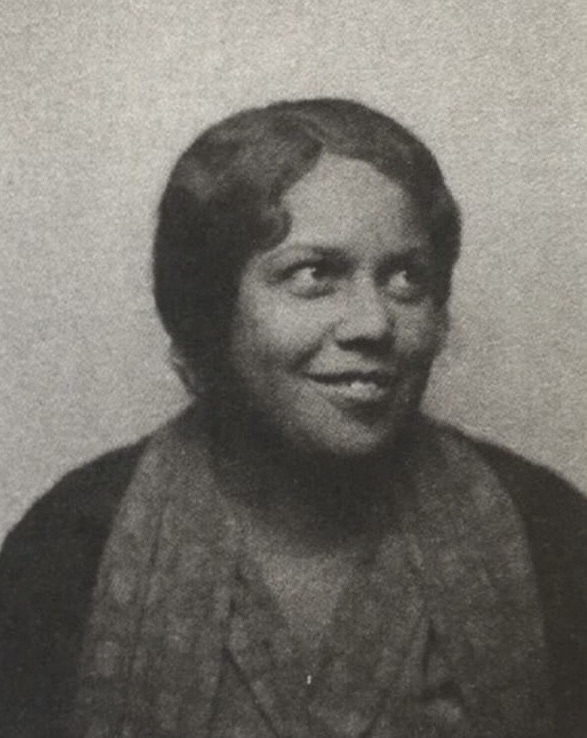
Gwendolyn B. Bennett was an American artist, writer, teacher, poet and journalist who contributed to Opportunity: A Journal of Negro Life, which chronicled cultural advancements during the Harlem Renaissance.
Archive beta: biographies are source-linked; map, timeline, context, date, and coordinate metadata may be approximate or under review.
What this means
Reviewed items have a source behind them. Approximate items are useful context, not final proof. Needs source and beta review labels mark places where the archive is still checking the trail.
Gwendolyn B. Bennett was an American artist, writer, teacher, poet and journalist who contributed to Opportunity: A Journal of Negro Life, which chronicled cultural advancements during the Harlem Renaissance. She made considerable accomplishments in art, poetry, and prose. A true star. Gwendolyn grew up in New York City where she was enrolled at Brooklyn Girls’ High. There, she became the first African-American student to be elected into the school’s Literary and Drama societies. While enrolled at Pratt Institute (where she transferred to after the “racist atmosphere” at Columbia University became too much for her) Bennett had two of her poems published in two prominent black magazines. After graduating from Pratt, Bennett became a member of the Fine Arts Department at Howard University where she taught as an assistant professor and soon after received a scholarship at the Académie Julian, and the École du Pantheon in Paris where she worked with a variety of mediums including watercolor, oil, woodcut, and pen and ink.
Bennett would go on to write some of the most elegant poetry of the era, illustrate dynamic covers for prominent Black journals and form close relationships with luminaries like W. E. B. Du Bois, Langston Hughes and Richard Wright. From 1926 to 1928, Bennett worked as an assistant editor for Opportunity under Charles S. Johnson — the founder and editor of Opportunity. She was given a literary and fine arts column in the magazine, “The Ebony Flute,” which praised and distributed news about the artists involved in the intellectual and cultural revival of African American music, literature, and art. In the 1930’s, her literary career had been derailed by emotional turmoil arising from a series of hardships, including her father’s death, an ill-fated marriage and unwarranted attention from the House Un-American Activities Committee, which accused her of being a Communist because of her work.
“To Usward,” a poem she dedicated “to all Negro youth known and unknown who have a song to sing, a story to tell or a vision for the sons of earth.” It went, in part:(see one note)
Her published poems (24 in all, from 1923 to 1934) were peppered with references to Black bodies, history and lives, and the verse could be lyrical, melancholy and even affronted in tone: “I sailed in my dreams to the Land of Night/Where you were the dusk-eyed queen” (“Fantasy,” 1927); “I love you for your brownness,/And the rounded darkness of your breast” (“To a Dark Girl,” 1927); “Memory will lay its hand/Upon your breast/And you will understand/My hatred” (“Hatred,” 1926). Bennett was also a stylish illustrator, exploring racial awareness through her covers for The Crisis and Opportunity, a literary journal essential to the Black community. In 1939, she was one of 12 Black women honored by the Women’s Service League of Brooklyn as “distinguished women of today” at the New York World’s Fair.
Unfortunately, much of Bennett’s original work has been destroyed or cannot be found. Bennett rarely exhibited or marketed her artwork, and some of her earlier work from abroad was destroyed in a fire in 1926 at her step-mother’s house. After Bennett died, more of her work was destroyed in yet another fire in the 1980s. Historians regard her as a foundational member of the race-conscious writers of the Harlem Renaissance. Though she never gained the wide audience she desired, Bennett left a rich legacy through her writing and art, and her passion and fortitude helped the Harlem Renaissance grow, through her own work as well as her fostering of young talent. She wrote in a letter to a friend in 1941, ““I have decided that I will continue telling the story of the Negro’s cultural contribution to American culture no matter what my enemies have tried to do to me.”
- Lifespan
- 1902-1981
- Nationality
- American
- Occupations
- Artist, Writer, Editor
- Era
- Harlem Renaissance
- Born
- 1902 Reviewed
- Died
- 1981 Reviewed
- Tags
- American, Harlem Renaissance, Artist, Writer, Editor
- Themes
- Writing, Arts and Culture, Global History