Biography
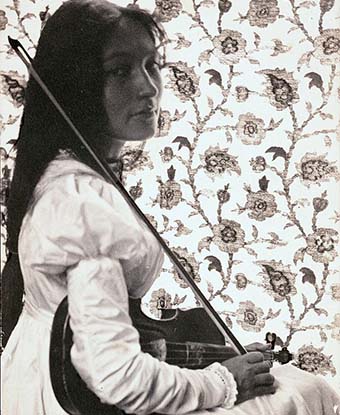
Zitkala-Ša was a Yankton Dakota writer, editor, translator, musician, educator, and political activist who fought for women's suffrage and Indigenous voting rights in the early 20th century. Her writings and activism led to citizenship and voting rights for not only women, but all Indigenous people While studying music, she began to work on her writings.
Archive beta: biographies are source-linked; map, timeline, context, date, and coordinate metadata may be approximate or under review.
What this means
Reviewed items have a source behind them. Approximate items are useful context, not final proof. Needs source and beta review labels mark places where the archive is still checking the trail.
Zitkala-Ša was a Yankton Dakota writer, editor, translator, musician, educator, and political activist who fought for women’s suffrage and Indigenous voting rights in the early 20th century. Her writings and activism led to citizenship and voting rights for not only women, but all Indigenous people
While studying music, she began to work on her writings. She wrote autobiographical essays and short stories under her Sioux name “Zitkála-Šá” meaning “Red Bird” in the Yankton language. Her works were printed in publications such as Atlantic Monthly and Harper’s Weekly. Her first book, Old Indian Legends, was significant because it translated many Sioux myths to English to preserve for future generations. Her writings focused on Dakota history and culture, corruption of the United States government at the expense of Native people, and the trauma and terror experienced by Indigenous children who were separated from their families and culture in these boarding schools.
In 1902, she published an article in Atlantic Monthly (now The Atlantic) called “Why I am a Pagan,” in which she wrote about her traditional beliefs to counter the trend of Native converting and assimilating to Christianity. In 1911, she joined the Society of American Indians (SAI), an organization founded for and by Native Americans to challenge the wardship status of Native Americans and their lack of U.S. citizenship. Zitkála-Šá was one of many women in the SAI who advocated for women’s suffrage and in 1917 she became the secretary of the SAI and moved to Washington, D.C. Here, she became a visible part of the Women’s Suffrage Movement and spoke at the National Women’s Party headquarters in 1918.
In August 1920, the Nineteenth Amendment was ratified, taking away sex as a barrier to voting for citizens. However, at least one third of Native adults lacked U.S. citizenship and therefore still could not vote. Zitkála-Šá continued her fight for Native American citizenship and suffrage, urging American women who now had the vote to help support an Indian citizenship bill. She traveled around the U.S., calling on white women to use their newly won suffrage rights to enfranchise Native peoples. In 1924, in part due to Zitkála-Šá’s advocacy, Congress passed the Indian Citizenship Act that endowed full citizenship rights to all native-born people in the country. In 1926, Zitkála-Šá and her husband formed the National Council of American Indians to connect the political activism of Natives across the country. They traveled, heard concerns, discussed policy and legislation, and registered voters.
Zitkála-Šá was one of the most important reformers of the 20th century. She helped empower Indigenous people by writing about their culture, history, personal experience, and concerns. Her writings forced the audience to face the complexities and beauty of Indigenous culture and the tragedy of the Native experience in America. And her activism influenced change that advocated for citizenship rights, better educational opportunities, improved health care and cultural recognition and preservation for Native Americans.
- Lifespan
- 1876-1938
- Nationality
- Yankton Dakota
- Occupations
- Writer, Musician, Activist
- Era
- Progressive Era
- Born
- 1876 Reviewed
- Died
- 1938 Reviewed
- Tags
- Yankton Dakota, Progressive Era, Writer, Musician, Activist
- Themes
- Activism, Writing, Arts and Culture, Global History