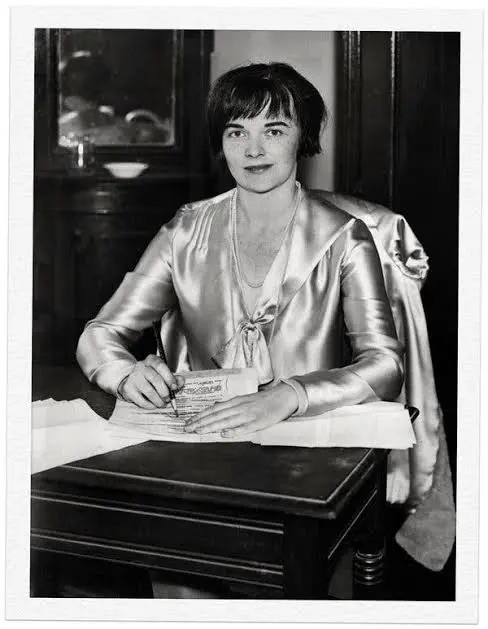
Biography
Ursula Parrott, was a prolific modern novelist, screenwriter, and short story writer whose sensational first novel, Ex-Wife, was a Jazz Age best seller. Adapted for film as the box office smash, The Divorcee, it starred Norma Shearer (which she won the Oscar for best actress).
Archive beta: biographies are source-linked; map, timeline, context, date, and coordinate metadata may be approximate or under review.
What this means
Reviewed items have a source behind them. Approximate items are useful context, not final proof. Needs source and beta review labels mark places where the archive is still checking the trail.
Ursula Parrott, was a prolific modern novelist, screenwriter, and short story writer whose sensational first novel, Ex-Wife, was a Jazz Age best seller. Adapted for film as the box office smash, The Divorcee, it starred Norma Shearer (which she won the Oscar for best actress). From 1929 until the late 1940s, she published 20 books and more than 100 short stories, articles and serialized novels, from which 10 movies were adapted.
Reading them today, one encounters direct and relevant discussions about marriage and divorce, sex and its consequences, work-life balance and burnout for career women, and the challenges of child-rearing at a time when many men were free of the burdens of fatherhood and many women were drawn — or pushed, depending on how you saw it — toward life outside the home.
Ursula’s debut novel, “Ex-Wife” (1929), was written from a woman’s perspective and addressed topics like marriage, infidelity and divorce. A delightful rediscovery, “Ex-Wife” is a stylish and witty cautionary tale written from a woman’s perspective about life in hedonistic NYC at a time of significant cultural change. Focused on young marriage, infidelity, divorce, self-sufficiency and remarriage, the novel brims with frustration, exhaustion, conflict and disappointment as it offers representations of sex (consensual and otherwise) and its consequences, including a powerful abortion scene.
She also traveled the world, once for an extended story-collecting trip to Russia; flew with the Civilian Air Corps during World War II; and, perhaps most important to her, put her son through Harvard. In the mid-to-late 1940s, Ursula struggled — financially, mentally and physically — even as she continued to publish and reflect on the second postwar generational change she witnessed in her lifetime.
Despite ample press about Ursula’s personal life and her literary career, not a single American newspaper appears to have published her obituary. She suffered the fate of many female authors of her time, inaccurately dismissed as a writer churning out romantic pablum for undiscerning female readers. Ursula was, first and foremost, a trenchant observer of women like her, who were smart, ambitious and adventurous.
- Lifespan
- 1899-1957
- Nationality
- American
- Occupations
- Novelist, Screenwriter, Journalist
- Era
- Jazz Age
- Born
- 1899 Needs source
- Died
- 1957 Needs source
- Tags
- American, Jazz Age, Novelist, Screenwriter, Journalist
- Themes
- Writing, Global History